

5 minute read · Dec 26, 2025
What Does a Mini Split System Look Like Installed in a Home?
Ductless mini splits are a great way to heat and cool your home, but you may be wondering, what will it look like once it’s installed?
Read MoreAC replacement cost explained: system size, SEER rating, ductwork and labor, plus what a rowhome retrofit adds. Rebates and financing options included.
Most central air conditioner replacements in this region land between $3,900 and $7,900 installed, which matches the national contractor survey range (Angi, 2026). Replacing the furnace at the same time pushes the project into full HVAC replacement territory, $5,000 to $22,000 with an average of $7,500.
Where you land inside that range is decided by four things: the capacity your house actually needs, the efficiency tier you choose, the condition of your ductwork, and whether the indoor coil and air handler are being replaced alongside the outdoor unit. Here is how each one moves the number.
| Scope of work | Typical installed cost | Source |
|---|---|---|
| Central air conditioner replacement | $3,900 to $7,900 | Angi, 2026 |
| Full HVAC replacement (heating and cooling) | $5,000 to $22,000, average $7,500 | Angi, 2026 |
| Ductless mini-split system | $2,000 to $14,500 by number of zones | Angi, 2026 |
| Heat pump instead of AC (cools and heats) | $4,200 to $7,600 | Angi, 2026 |
| New or replacement ductwork, if needed | $2,000 to $7,500 | Angi, 2026 |
| Labor for HVAC installation | around $1,500 on average | Angi, 2026 |
| Permits, thermostats, zoning and other extras | $250 to $3,100 | Angi, 2026 |
You will notice no Synergy3 Home Solution prices in that table. We do not publish them, because a number given before anyone has measured your load, opened your ductwork or looked at your electrical panel is a guess dressed up as an estimate.
Of all the factors in a quote, this one has the largest impact on comfort. Cooling capacity is measured in tons. Most homes fall between 2 and 4. What matters is how the number was reached: the industry standard is an ACCA Manual J load calculation that accounts for insulation, window area and orientation, ceiling heights and air leakage. Sizing by square footage or by copying the old unit is how houses end up with oversized systems that cool fast, shut off, and leave the air clammy.
Higher SEER2 ratings cost more up front and less to run. The payback depends on how many hours you actually run the unit, so a top-tier system makes more sense in a house that cools hard all summer than in one that runs the AC six weeks a year. See the section below on what a new system saves monthly.
An outdoor condenser is only half the system. Pairing new outdoor equipment with an old indoor coil produces a mismatched system that will not deliver its rated efficiency and often fails early. A quote that leaves the coil out is not a cheaper version of the same job.
Ducts that leak, are undersized, or run uninsulated through a hot attic will cap the performance of anything you connect to them. Replacing or extending ductwork runs $2,000 to $7,500 on its own, and it is the most common reason two quotes for "the same" job differ by thousands.
New equipment needs a correctly sized circuit and disconnect. Older refrigerant lines may need replacing or flushing, and the old unit's refrigerant must be recovered by an EPA Section 608 certified technician rather than vented.
In Philadelphia, replacing equipment beyond like-for-like parameters requires a mechanical permit from L&I. Township requirements vary across New Jersey. Your contractor should be pulling permits as part of the job.
Complexity on site is a real cost. A condenser lifted onto a flat rowhome roof is a different job from one set on a pad in a backyard. And a replacement bought during a July heat wave is bought from whatever is in stock, which is rarely the cheapest or the best-matched option.
A cost guide that only covers the invoice is telling you half the story. The other half is what the equipment does to your monthly energy bills over the next fifteen years, and that is where the efficiency tier earns back its premium or fails to.
Cooling efficiency is expressed as SEER2, the seasonal energy efficiency ratio, which measures cooling delivered per unit of electricity across a whole season rather than at one test point. Higher SEER2 units cost more upfront and less to operate. How much less depends on three things nobody can guess from a brochure: how many hours you actually run the system, what you pay per kilowatt-hour, and how well the house holds the cooling you have paid for.
That last point is why savings estimates so often disappoint. In a home with leaky ducts in a hot attic, a jump of several SEER2 points buys less than sealing the ducts would. The order that produces the best return is usually envelope first, equipment second.
ENERGY STAR's own figure for the whole picture is that replacing a unit more than 10 years old with an efficient one can cut heating and cooling costs by up to 20 percent. Residential electricity in Pennsylvania averaged 21.73 cents per kilowatt-hour in June 2026 and in New Jersey 24.95 cents, per the U.S. Energy Information Administration, so ask any contractor quoting you a high-efficiency upgrade to show the arithmetic against your own summer bills rather than a national average.
Two technology features worth pricing separately while you are at it: a variable-speed or two-stage compressor, which runs longer at lower output and controls humidity far better than a single-stage unit, and a smart thermostat, which is cheap next to the equipment and is the only part of the system you will interact with daily.
A proposal that helps you decide provides more than a total. It lists the components - outdoor unit, indoor coil or air handler, line set, thermostat, electrical work, permit - with model numbers and efficiency ratings, so a basic system and an advanced variable-speed one can be told apart. It states what is included in labor and what would be an additional expense, such as duct modifications found once the old equipment is out.
Two things worth asking every contractor. First, how the quoted system will perform in extreme weather rather than at rating conditions, since that is when homeowners notice the difference between a basic and a premium unit. Second, what the operating cost looks like at current electricity rates for each option they are proposing - a larger investment in a higher-efficiency, reliable brand is easier to judge when the monthly saving is on paper next to it. Contact the installer with those two questions before signing and the right choice usually becomes obvious.
A written estimate you can actually compare should list:
Good, better and best only mean something when all three describe the same scope with different equipment. The fastest question to expose a thin bid: what tonnage did the load calculation come out at, and what is the rated SEER2 of this specific indoor and outdoor combination?
Understand what changed in 2026. The federal 25C Energy Efficient Home Improvement Credit ended for equipment placed in service after December 31, 2025. It is not available on a 2026 air conditioner replacement. Treat any quote or online calculator that still includes it as out of date.
Check your utility's program. PECO publishes current rebates and discounts for residential heating and cooling equipment, with applications due within 90 days of purchase or installation. In New Jersey, New Jersey's Clean Energy Program runs whole-home incentives tied to a home energy assessment plus 0% financing. Confirm current amounts directly with the program, since terms are revised periodically.
Pennsylvania's state rebates are not open. The federally funded Home Energy Rebates have not launched in Pennsylvania. As of May 2026 the Department of Environmental Protection was still awaiting Department of Energy approval.
Replace on your schedule, not the system's. Spring and autumn replacements are cheaper and better planned than August emergencies, and in the winter months installers have room to do the job properly.
Replace heating and cooling together if both are due. One mobilization, one permit process, and a properly matched coil.
Reduce the load before you buy capacity. Attic insulation and duct sealing can drop the tonnage you need, which lowers both the purchase and the running cost.
Spread the payment. Synergy3 Home Solutions offers financing with approved credit, including 0% options, and runs periodic promotions on qualifying system replacements; see our current offers.
Two local patterns account for most of the variation we see in quotes here.
Philadelphia rowhomes and twins often have no proper duct system, or have one squeezed into a converted space and never resized. Condensers frequently go on flat roofs or into narrow side yards, which affects both labor and equipment choice. Where ductwork genuinely is not viable, a ductless system does the job without opening walls, which is why the $2,000 to $14,500 mini-split range shows up so often in this market.
Cape Cods and split-levels across South and Central Jersey usually have ducts, but those ducts commonly run through unconditioned attics and lose cooling before it reaches the room. Replacing the equipment without addressing that produces a new system with the old complaint. It is worth asking any contractor what they intend to do about the attic runs.
Older homes on 100-amp electrical service, common on both sides of the river, may need panel work before new equipment goes in. That is licensed electrical work and belongs in the quote, not in a surprise conversation on installation day.
Synergy3 Home Solutions has been replacing cooling systems in this housing stock since 2006, with NATE-certified technicians and a load calculation on every job. See AC Installation & Replacement for what our process covers.
Published ranges tell you whether a quote is reasonable. Only a site visit tells you what your house needs. Get in touch with Synergy3 Home Solutions for a free replacement estimate, and we will give you a written price with the scope spelled out. Family-run out of Philadelphia, coming up on 20 years in the trade, with a 4.9-star rating and 500+ Google reviews. Hours are Monday to Friday 7:00 am to 7:00 pm and Saturday 7:00 am to 3:00 pm during peak season.
It is a rule of thumb, not a standard: multiply the age of the system in years by the cost of the proposed repair. If the result exceeds $5,000, replacement is usually the better spend. A $400 repair on a 6-year-old system gives 2,400, so repairs are the better call. The same $400 repair on a 14-year-old system gives 5,600, so start pricing replacement. Treat it as a prompt to run the numbers properly rather than as an answer.
A home that size typically needs somewhere around 3 tons, which puts it in the middle of the $3,900 to $7,900 central AC range from Angi's 2026 data. If ductwork has to be added or replaced, add $2,000 to $7,500. Square footage alone does not determine capacity, which is why a load calculation matters: two 2,000 sq ft homes with different insulation and window exposure can need different tonnage.
For a straightforward central AC replacement with usable ductwork, $3,900 to $7,900 is the mainstream national range. Below about $3,000 you should ask what has been left out, most often the indoor coil, the permit or the duct work. Above about $10,000 there should be a clear reason on the page, such as high-efficiency variable-capacity equipment, multi-zone ductless, or significant ductwork and electrical scope.
ENERGY STAR recommends evaluating an air conditioner or heat pump for replacement once it is more than 10 years old, and notes that a newer efficient system can cut heating and cooling costs by up to 20 percent. In practice, well-maintained systems in this region often run longer than that. Age alone is not a reason to replace, but age plus a second significant repair usually is.
Generally yes, in total project terms. One crew mobilization, one permit process, and the indoor coil gets matched to the new condenser rather than to an aging furnace. The trade-off is a bigger single invoice, which is where financing normally comes in. If the furnace has years of life left, there is no obligation to replace it early.
It is worth pricing. A heat pump costs about the same to install as central AC, $4,200 to $7,600 per Angi's 2026 data, and it heats as well as cools. Whether it saves you money depends on what you are heating with now and on local fuel prices. Homes leaving electric resistance or oil heat almost always benefit.
Because they usually describe different work. One includes the indoor coil and the other does not; one includes duct sealing, a permit and an electrical upgrade and the other assumes none are needed; one is single-stage equipment and the other variable-capacity. Compare the scope line by line before comparing the totals, and ask each contractor to price the same scope.
Ductless mini splits are a great way to heat and cool your home, but you may be wondering, what will it look like once it’s installed?
Read More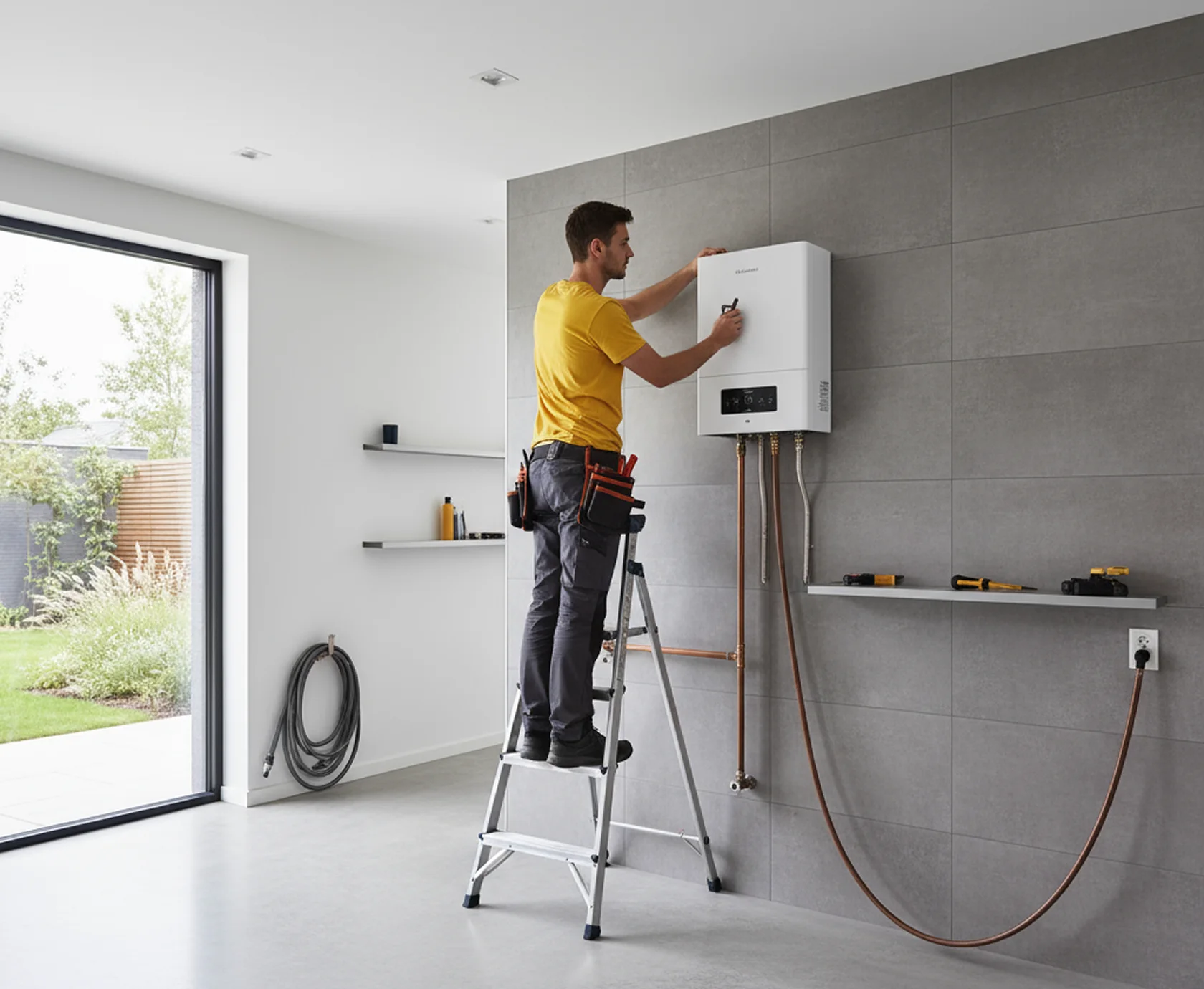
Keep your heat pump running efficiently year-round with these essential maintenance tips every homeowner should know.
Read More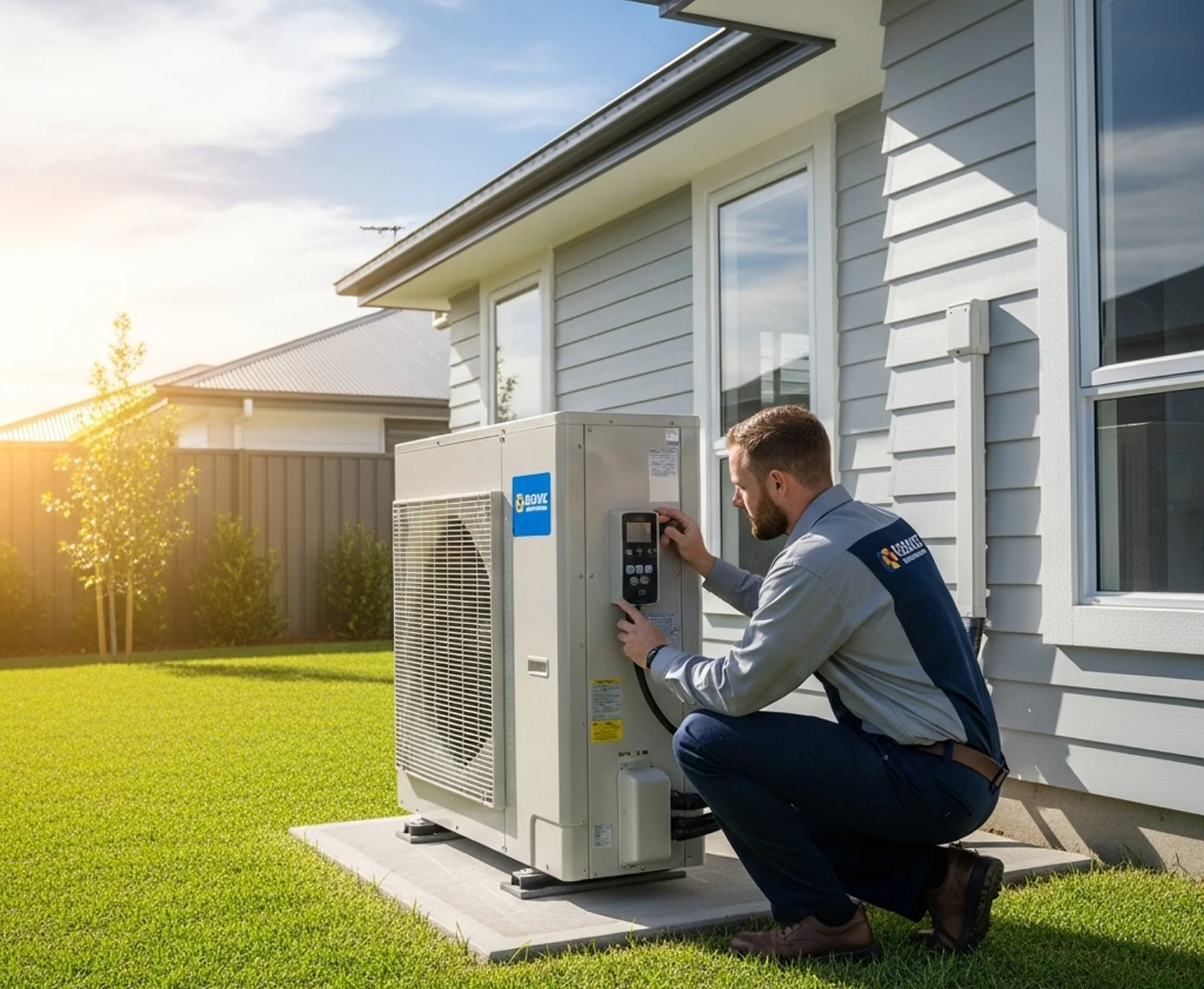
Explore the pros and cons of ductless and central HVAC systems to find the best fit for your home and lifestyle.
Read More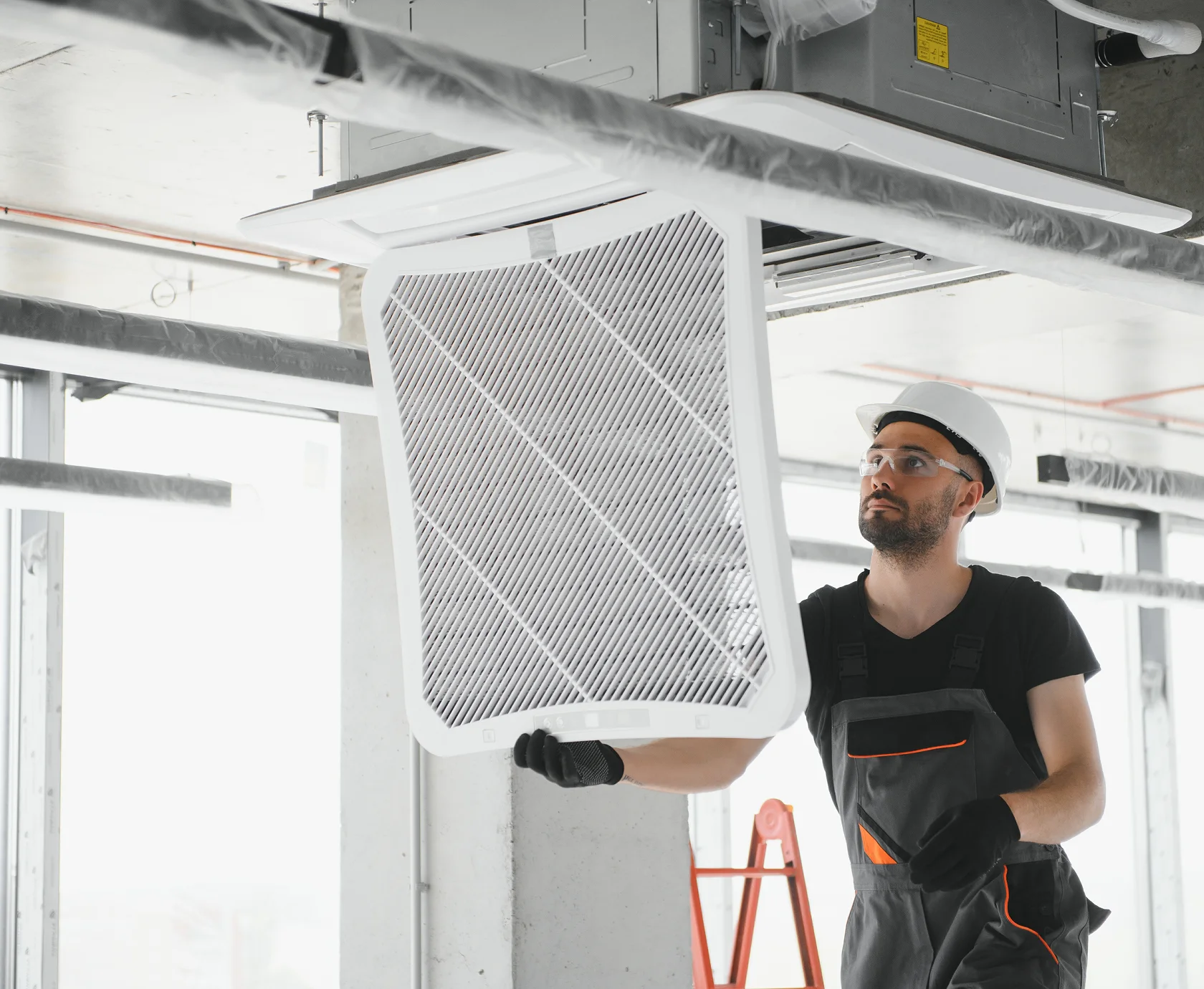
Discover practical steps to enhance the air quality in your home for a healthier and more comfortable living environment.
Read MoreGet your HVAC system ready for every season with this comprehensive checklist to ensure optimal performance year-round.
Read MoreLower your energy bills and reduce your carbon footprint with these practical HVAC energy-saving strategies.
Read MoreFind a reliable and professional HVAC contractor with these essential tips for homeowners.
Read MoreA plumber-approved way to clear a clogged sink, tub, or shower drain — and the warning signs that mean it’s time to put the plunger down.
Read MoreWater pooling around your indoor AC unit usually traces back to one of five causes. Here’s how to tell which one you have and what to do next.
Read MoreFrom a thermostat set to ON to a tripped safety switch, here are the six most common reasons a furnace blows cold air — and which fixes are safe to try.
Read MoreAn annual flush clears out the sediment that shortens a water heater’s life. Here’s the full process, from shutting off power to refilling the tank.
Read MoreA room-by-room fall checklist that gets Philadelphia and South Jersey heating systems ready before the first cold night — most of it in one weekend.
Read MoreThat constant refill sound is water running onto your bill. Five quick checks inside the tank fix most running toilets — no special tools needed.
Read MoreOne burst pipe can flood a basement in minutes. Here’s how Delaware Valley homeowners can prevent freezes — and thaw a frozen line without making it worse.
Read MoreIf your home feels sticky at 72°F, your AC may be cooling without dehumidifying. Here’s what drives indoor humidity in our region and how to fix it.
Read MoreA boiler rarely warns you before it fails for good. Here’s how to catch the signs early, what a new one costs, and what installation day looks like.
Read More
Moving into a new home in Princeton, West Windsor, or Plainsboro is exciting, but it also comes with a long list of systems to understand. One of the most important is your heating and cooling equipment.
Read MoreAir conditioner running but not cooling? Check the filter, thermostat, breaker, outdoor unit and refrigerant signs - and know when to call a technician.
Read More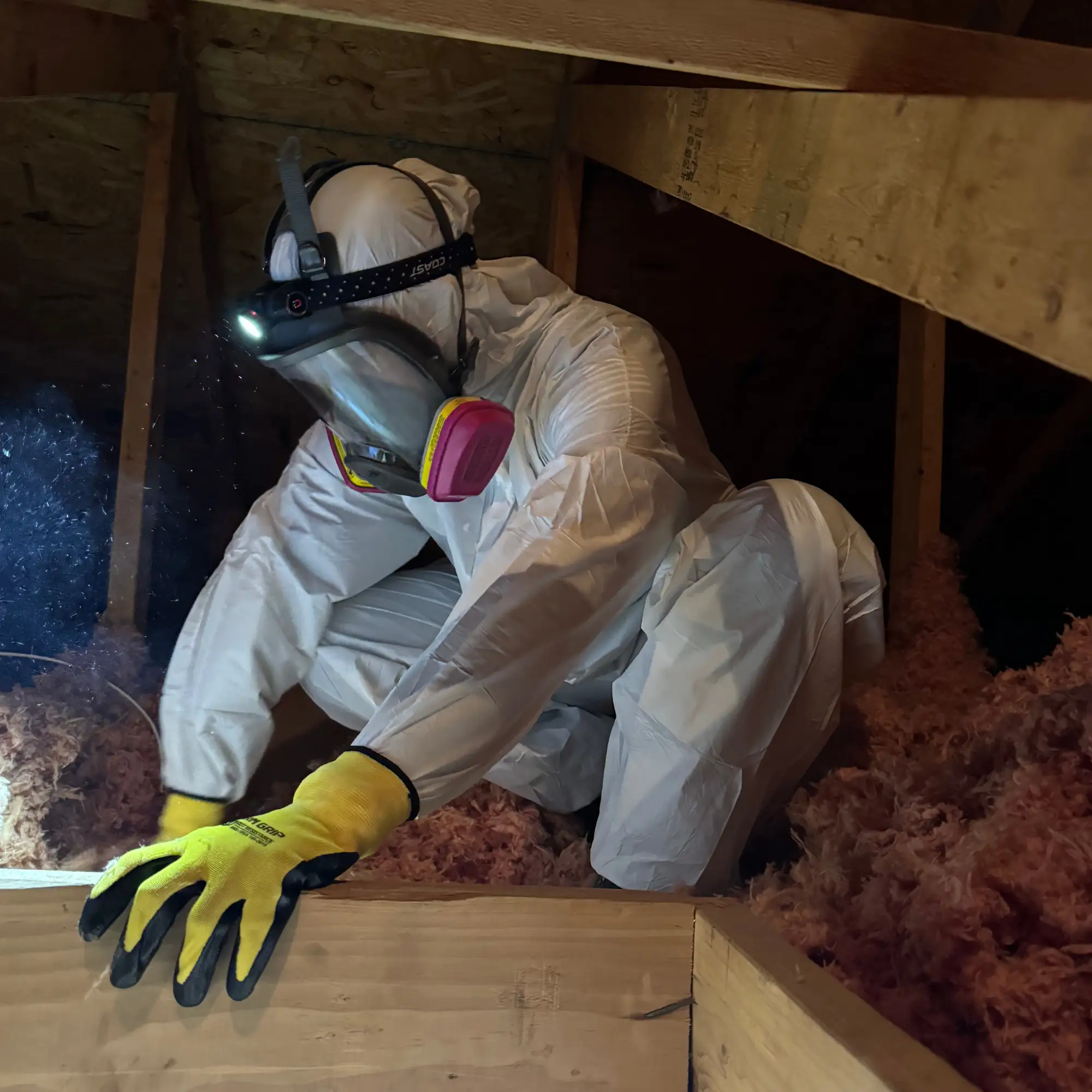
What attic insulation costs by material and R-value in PA and NJ, what air sealing adds, and the utility rebates that can cover part of the job.
Read MoreWhat furnace replacement costs in PA and NJ, what changes the price (size, efficiency, venting, ductwork), and which rebates and financing can offset it.
Read MoreHumming, jammed or completely dead? Reset, unjam and troubleshoot a garbage disposal safely - and learn when replacement beats another repair.
Read MoreWhat a heat pump costs to install in PA and NJ: price ranges by system type and size, what drives the quote, and the rebates and financing available.
Read MoreCompare heat pumps and gas furnaces on upfront cost, running cost, comfort and rebates for Philadelphia and New Jersey homes - with a clear verdict.
Read MoreHow a heat pump moves heat instead of making it, what changes in winter, and why cold-climate models keep working in Philadelphia and New Jersey.
Read MoreThe safe way to clean and deodorize a garbage disposal, what never to put down it, and the habits that keep your kitchen drain from clogging.
Read MoreTankless water heater costs in PA and NJ - unit, venting and gas line upgrades - plus the payback math versus a standard tank water heater.
Read MoreWhat a new water heater costs in PA and NJ: tank vs tankless, gas vs electric, permits and code upgrades, and how to keep the install price down.
Read MoreA plain-English guide to heat pumps: how they heat and cool, what they cost to run, and whether one makes sense in the Philadelphia and NJ climate.
Read More