

5 minute read · Dec 26, 2025
What Does a Mini Split System Look Like Installed in a Home?
Ductless mini splits are a great way to heat and cool your home, but you may be wondering, what will it look like once it’s installed?
Read MoreThe safe way to clean and deodorize a garbage disposal, what never to put down it, and the habits that keep your kitchen drain from clogging.
Cleaning a garbage disposal is an easy ten-minute job and needs nothing you do not already own: dish soap, ice, coarse salt, baking soda, vinegar and half a lemon. It is entirely a homeowner job, and it is worth doing on a schedule rather than in response to a foul smell. The only parts that are not homeowner work are anything involving the wiring, the mounting flange, or a unit that has started to leak.
Most people come to this looking for a smelly sink rather than a fault, and lingering odors are exactly what a proper clean fixes. That is worth knowing up front, because the smell usually is not coming from where you think. It lives on the underside of the rubber splash guard and on the walls of the grinding chamber, not down in the drain, which is why pouring things down the drain rarely fixes it on its own.
Persistent kitchen odors almost always have one of four sources, and knowing which one you have tells you which of the steps below actually matters.
The rubber baffle at the top of the drain traps a film of food and grime on its underside. It never gets ground, it never gets rinsed, and it is the single most common source of kitchen sink odor. If you scrub only one thing, scrub this.
Fats poured down the drain while the water is warm cool and solidify on the chamber walls and the impellers. Over months that coating traps particles and turns rancid.
Celery strings, corn husks, onion skins, pasta and rice do not grind cleanly. They wrap and swell, and what stays behind rots. These are the most stubborn deposits to shift once they have dried on, which is why they are worth scraping into the trash rather than sending down the drain.
Unlike most kitchen appliances, a disposal is worse for sitting unused. An idle one keeps whatever is inside it damp and dark. Running it briefly with cold water every few days does more for odor than any cleaner.
What you need: dish soap, a stiff-bristled brush or an old toothbrush, the Allen wrench that came with the disposal, a tray of ice cubes, half a cup of coarse rock salt, baking soda, white vinegar, and a lemon or lime wedge. About ten minutes.
A disposal that is dirty is a different problem from one that is clogged, and the fix is different too. If water backs up into the sink when you run it, cleaning the grinding chamber will not help: the debris has already gone past the disposal and is sitting in the trap or the drain line beyond it.
Work through it in this order, and stop where it says to stop.
Two things to avoid entirely: chemical drain cleaners, which sit against the rubber components and the seals and make the eventual repair worse, and boiling water, which melts grease and moves the problem further down the pipes where it hardens again out of reach.
A garbage disposal does not have blades. Two blunt impellers on a spinning plate throw food against a stationary grind ring, which pulverizes it into particles small enough to flow out with the water. Understanding that changes how you use it: the machine needs a strong flow of cold water to carry those tiny particles down the drain line, and it cannot deal with anything fibrous, greasy or starchy that turns into paste instead of particles.
Most smells come from what stays behind rather than what goes through - a film building up above the grind chamber, on the underside of the splash guard and around the rim where nothing scrubs. That is why the cleaning steps above focus there rather than on pouring products in. Experts in the trade will tell you the same thing: a disposal that gets cold water, a few seconds of run time after the sound changes, and an occasional scrub of the guard rarely smells at all, and the chore takes a minute.
Cleaning is a homeowner job. These are not:
Synergy3 Home Solutions has been looking after kitchen plumbing in Philadelphia and New Jersey homes since 2006. If the smell is coming from the line rather than the unit, or the sink is draining slowly, our Garbage Disposal Repair team can sort out which it is on the first visit.
If a proper clean has not fixed the odor or the sink is draining slowly, get in touch with Synergy3 Home Solutions. We are family-run out of Philadelphia, with 20 years in the trade, a 4.9-star rating, and 500+ Google reviews. Our hours are Monday to Friday 7:00 am to 7:00 pm and Saturday 7:00 am to 3:00 pm during peak season, with same-day service available on most calls.
Dish soap and a brush on the splash guard, followed by ice and coarse salt in the chamber. That combination handles the two places residue actually collects. Baking soda and vinegar deodorize afterwards, and a citrus peel finishes it. Everything else on the market is a variation on those.
Yes. Both are safe for the unit and the plumbing. Add the baking soda first, then the vinegar, let it foam for five to ten minutes with the disposal off, then flush with cold water while running the unit. The one rule is never to mix it with bleach or a chemical drain cleaner.
It helps, and it is the part most people skip. Ice does not sharpen anything, because disposals grind with blunt impellers rather than blades. What it does is knock hardened grease and food off the impellers and the chamber walls. Adding coarse rock salt to the ice makes it noticeably more effective.
Better not to. Pods are made to dissolve in a hot, agitated wash cycle. In a cold disposal they leave a soapy residue behind, and the concentrated detergent is harsher on the rubber splash guard than plain dish soap. Warm soapy water in a filled sink does the same job without the downside.
Scrub the splash guard monthly and run ice and salt every two to four weeks. Heavy cooking households benefit from doing both more often. If you only ever do one thing, make it the splash guard.
That usually means organic matter is decomposing somewhere it is not being flushed away, most often under the splash guard or in the P-trap below the sink. Clean the disposal first. If the smell returns quickly, the trap or the drain line is holding residue and needs to be cleared.
No. Any step that puts a brush, your fingers or a tool near the drain opening happens with the unit unplugged or its breaker off. Flushing, grinding ice and running citrus are done with the power on, but nothing goes into the chamber while it is live.
Ductless mini splits are a great way to heat and cool your home, but you may be wondering, what will it look like once it’s installed?
Read More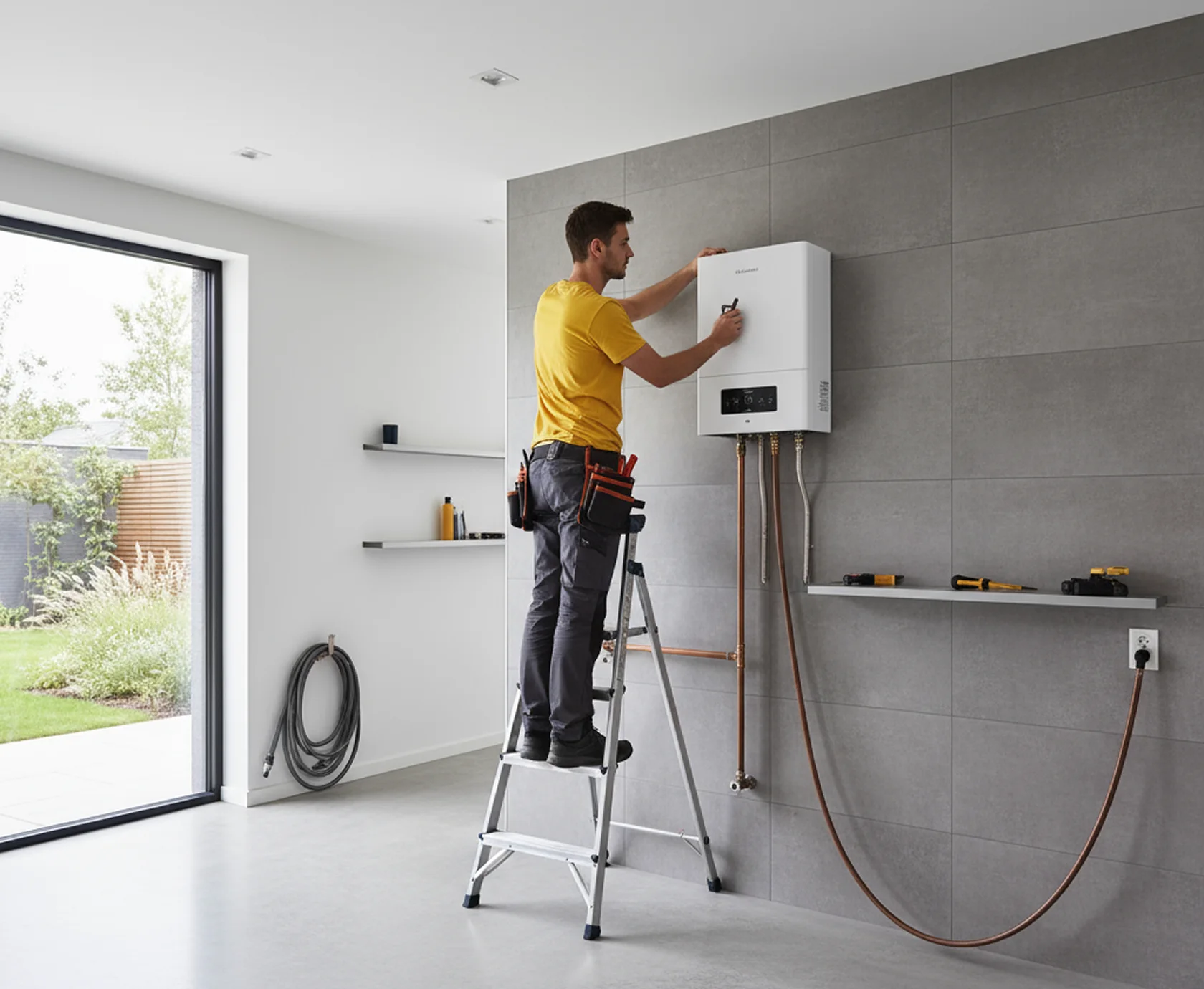
Keep your heat pump running efficiently year-round with these essential maintenance tips every homeowner should know.
Read More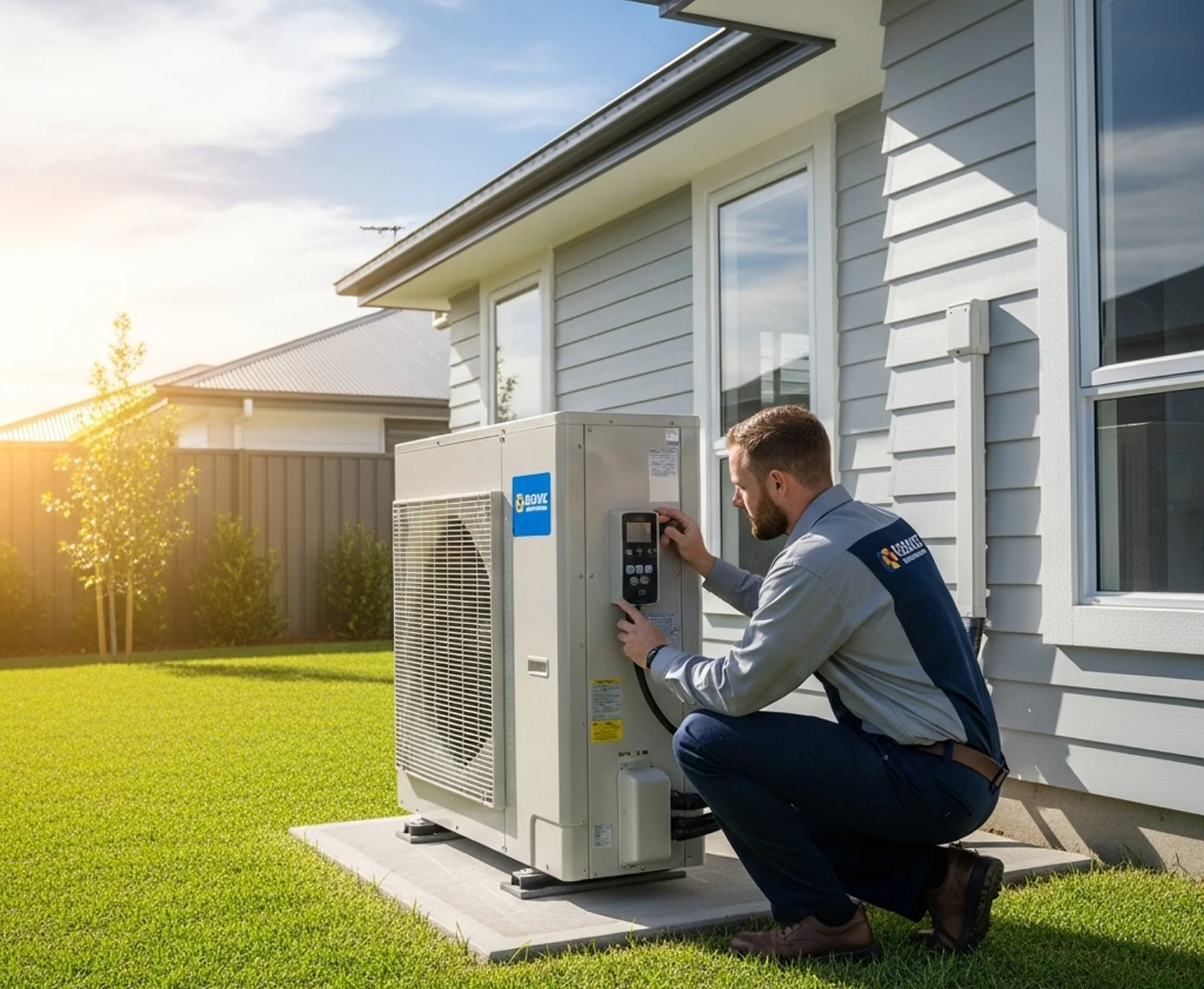
Explore the pros and cons of ductless and central HVAC systems to find the best fit for your home and lifestyle.
Read More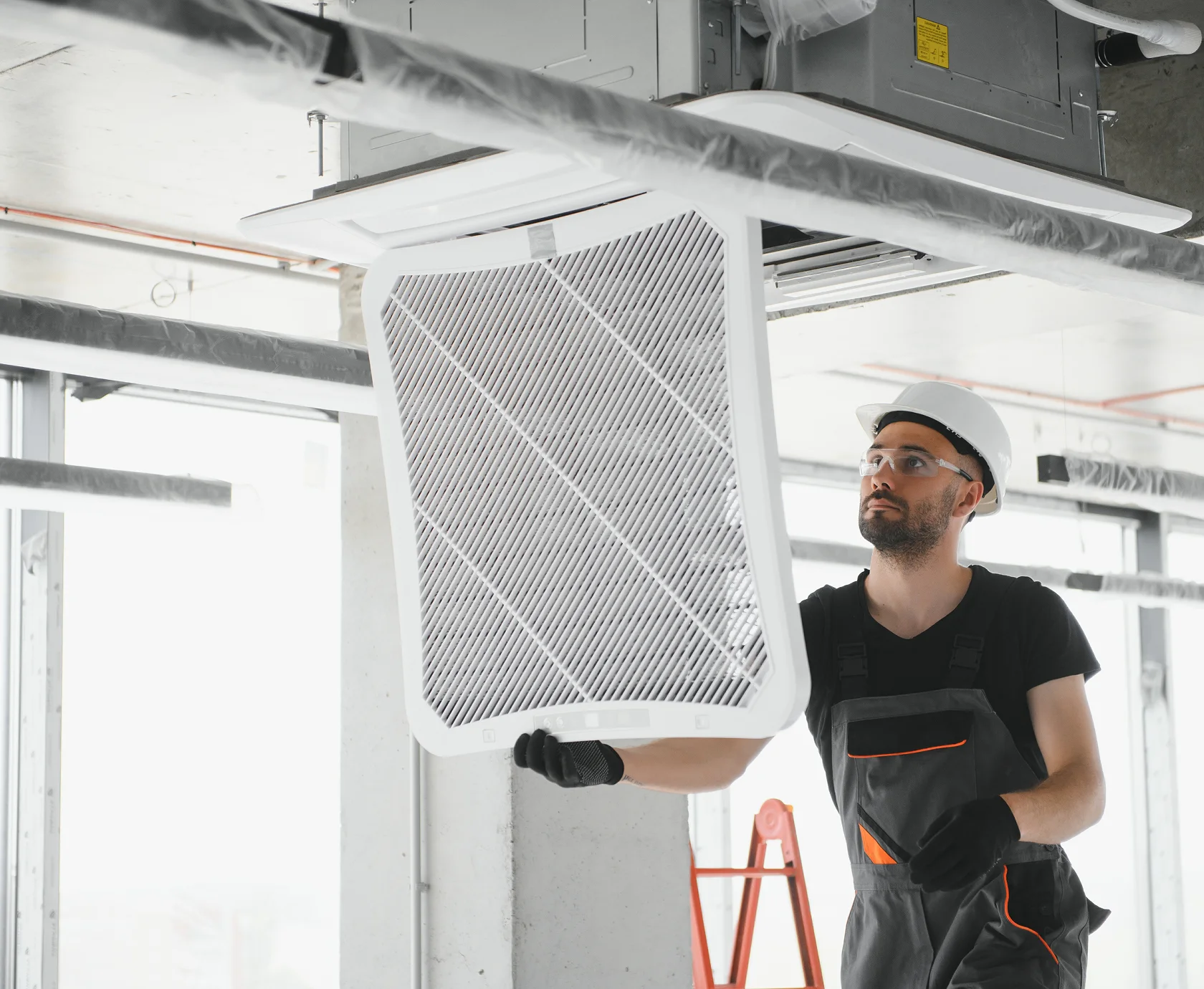
Discover practical steps to enhance the air quality in your home for a healthier and more comfortable living environment.
Read MoreGet your HVAC system ready for every season with this comprehensive checklist to ensure optimal performance year-round.
Read MoreLower your energy bills and reduce your carbon footprint with these practical HVAC energy-saving strategies.
Read MoreFind a reliable and professional HVAC contractor with these essential tips for homeowners.
Read MoreA plumber-approved way to clear a clogged sink, tub, or shower drain — and the warning signs that mean it’s time to put the plunger down.
Read MoreWater pooling around your indoor AC unit usually traces back to one of five causes. Here’s how to tell which one you have and what to do next.
Read MoreFrom a thermostat set to ON to a tripped safety switch, here are the six most common reasons a furnace blows cold air — and which fixes are safe to try.
Read MoreAn annual flush clears out the sediment that shortens a water heater’s life. Here’s the full process, from shutting off power to refilling the tank.
Read MoreA room-by-room fall checklist that gets Philadelphia and South Jersey heating systems ready before the first cold night — most of it in one weekend.
Read MoreThat constant refill sound is water running onto your bill. Five quick checks inside the tank fix most running toilets — no special tools needed.
Read MoreOne burst pipe can flood a basement in minutes. Here’s how Delaware Valley homeowners can prevent freezes — and thaw a frozen line without making it worse.
Read MoreIf your home feels sticky at 72°F, your AC may be cooling without dehumidifying. Here’s what drives indoor humidity in our region and how to fix it.
Read MoreA boiler rarely warns you before it fails for good. Here’s how to catch the signs early, what a new one costs, and what installation day looks like.
Read More
Moving into a new home in Princeton, West Windsor, or Plainsboro is exciting, but it also comes with a long list of systems to understand. One of the most important is your heating and cooling equipment.
Read MoreAir conditioner running but not cooling? Check the filter, thermostat, breaker, outdoor unit and refrigerant signs - and know when to call a technician.
Read MoreAC replacement cost explained: system size, SEER rating, ductwork and labor, plus what a rowhome retrofit adds. Rebates and financing options included.
Read More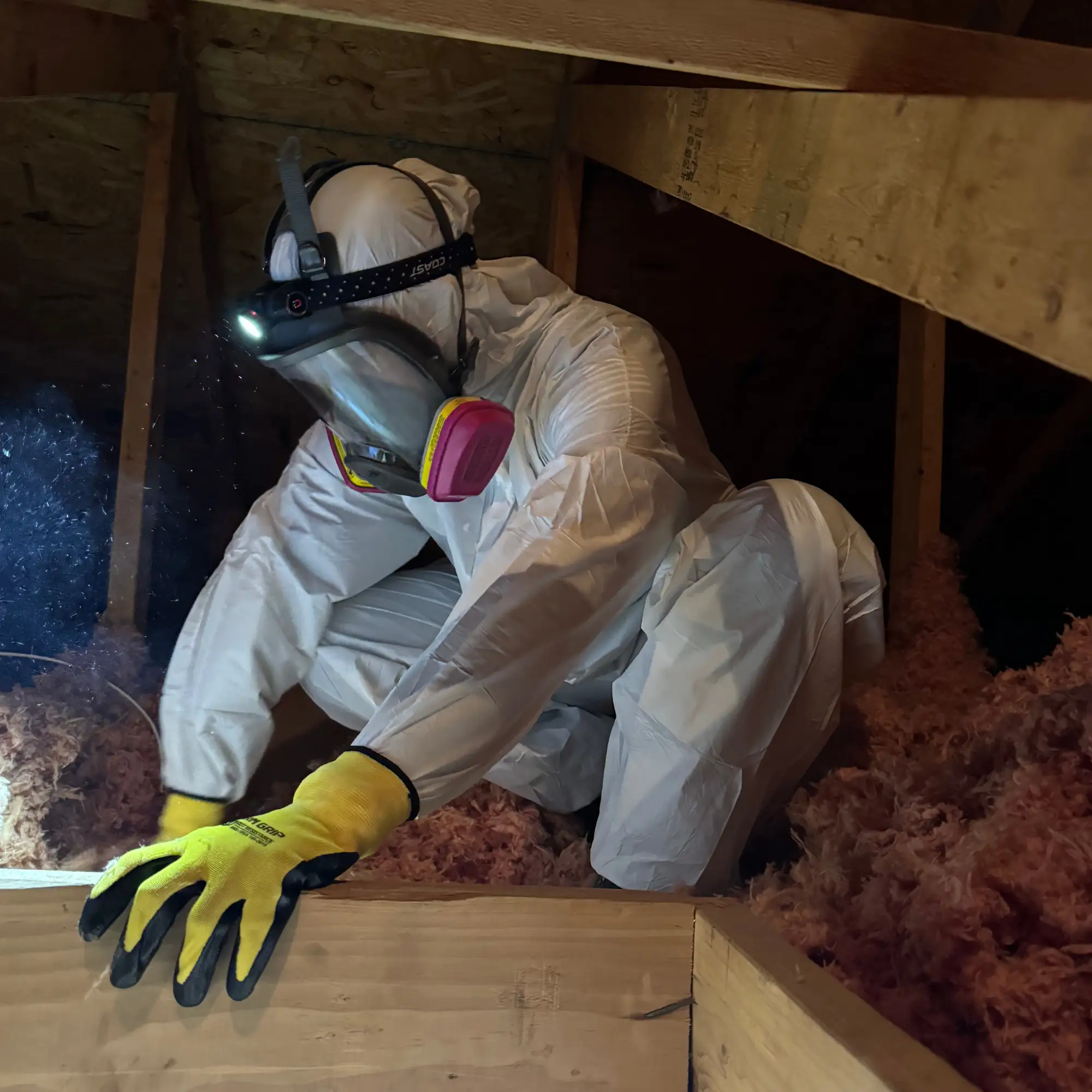
What attic insulation costs by material and R-value in PA and NJ, what air sealing adds, and the utility rebates that can cover part of the job.
Read MoreWhat furnace replacement costs in PA and NJ, what changes the price (size, efficiency, venting, ductwork), and which rebates and financing can offset it.
Read MoreHumming, jammed or completely dead? Reset, unjam and troubleshoot a garbage disposal safely - and learn when replacement beats another repair.
Read MoreWhat a heat pump costs to install in PA and NJ: price ranges by system type and size, what drives the quote, and the rebates and financing available.
Read MoreCompare heat pumps and gas furnaces on upfront cost, running cost, comfort and rebates for Philadelphia and New Jersey homes - with a clear verdict.
Read MoreHow a heat pump moves heat instead of making it, what changes in winter, and why cold-climate models keep working in Philadelphia and New Jersey.
Read MoreTankless water heater costs in PA and NJ - unit, venting and gas line upgrades - plus the payback math versus a standard tank water heater.
Read MoreWhat a new water heater costs in PA and NJ: tank vs tankless, gas vs electric, permits and code upgrades, and how to keep the install price down.
Read MoreA plain-English guide to heat pumps: how they heat and cool, what they cost to run, and whether one makes sense in the Philadelphia and NJ climate.
Read More